High-Protein Lunch Ideas for Ozempic | Filling Meals That Keep Muscle
10 midday options with 25-40g that keep you satisfied without the afternoon crash. No heavy dishes that'll sit in your stomach. Just solid picks you'll actually prep.
The best high-protein midday options on Ozempic are ones you can prep once and enjoy all week. Chicken salad lettuce wraps (35g), tuna bowls (32g), and rotisserie chicken with steamed veggies (38g) are reliable bets. Aim for 25-35g at noon to maintain momentum on muscle preservation. Cold foods are easier on your stomach in the first 2-3 days after injection — save the warm options for days 5-7.
Why Protein at Noon Matters on GLP-1 Medication
Here's the thing: breakfast is your foundation, but midday eating is where momentum happens. You've already nailed your morning intake. Your afternoon plate is your chance to double down and protect your muscles through the rest of the day and into the evening.
On this medication, most users say their appetite starts coming back by day 4-5 of their injection cycle. That's actually your advantage. While your first 48 hours are tough, days 3-7 give you more range to experiment with different options and textures. The noon window is often the easiest to execute because your nausea is lower and your digestion is more predictable than at breakfast.
But here's the catch: it's easy to go light at midday thinking you're "being good." A salad with a sprinkle of chicken isn't enough — it's a snack. You need enough protein to matter. That means aiming for 25-35g, just like breakfast. This does three critical things:
- Sends another muscle-preservation signal (your body needs this throughout the day, not just at breakfast)
- Stabilizes your afternoon energy and blood sugar — so you don't get the 3pm crash that makes you reach for junk
- Carries satiety all the way to the evening without making you feel stuffed or nauseous
The options below are designed to hit that target while staying light enough to digest comfortably, no matter where you are in your injection cycle.
Why GLP-1 Users Need More at Midday
If you take a GLP-1 medication like Ozempic, your body handles nutrition differently than it did before. GLP-1 drugs slow how fast your stomach empties, which is great for weight loss — but it also means you absorb nutrients over a longer window. That makes every bite count more. When someone skips their midday plate or just grabs a handful of crackers, they miss a major chance to fuel up the right way.
GLP-1 medications reduce appetite by design. That's how they drive weight loss. But reduced appetite doesn't mean reduced need. Your muscles still need amino acids. Your brain still needs steady energy. Your gut still needs fiber. The difference is that you have a smaller window and less desire to consume anything, so the quality of what you choose matters way more than before you started treatment.
Here's what most folks on GLP-1 therapy don't realize: skipping a midday sitting can stall weight loss instead of helping it. When you go too long without nutrition, your body holds onto fat and breaks down muscle instead. That's the opposite of what healthy progress looks like. A well-planned afternoon plate — with the right macros, fiber, and enough calories — keeps your metabolism humming and your energy steady until the evening.
Those with type 2 diabetes who take GLP-1 drugs have an extra reason to plan carefully. Steady nutrition through the day helps manage blood sugar. Going from breakfast straight to suppertime with nothing in between can cause glucose swings that leave you feeling shaky, tired, or foggy by mid-afternoon.
10 High-Protein Options That Work on Your Medication
Every option below hits 25-35g and can be prepped ahead. They're sorted by how easy they are to digest — gentlest first.
1. Chicken Salad Lettuce Wraps

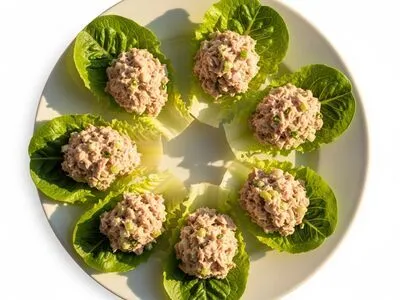
Cold, crunchy, feels more like a snack than "diet food." Use rotisserie chicken (already cooked, no additional oil needed) mixed with a little mayo and mustard. The lettuce replaces bread so you get volume without heaviness. Preps in 5 minutes.
- 4 oz shredded rotisserie chicken
- 2 tbsp light mayo
- 1 tbsp Dijon mustard
- Butter lettuce leaves (4-5 large leaves)
- Diced celery and red onion for crunch
2. Deli Meat and Hummus Plate
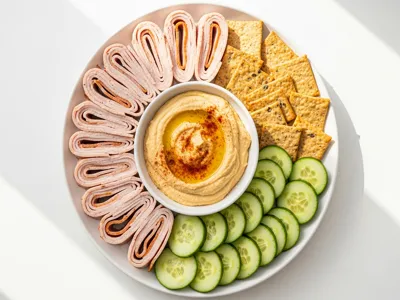
Minimal prep, solid nutrition. Sliced deli meat is pre-cooked and ready to go. Hummus adds creaminess and satiety without being heavy. Pair with veggies for crunch and fiber. This is your "grab it from the deli counter" pick.
- 6 oz low-sodium sliced deli meat (about 8 slices)
- 3 tbsp roasted red pepper hummus
- Raw veggies (carrots, celery, cucumber, bell pepper)
- 1 small whole grain pita or cracker (optional)
3. Tuna Power Bowl
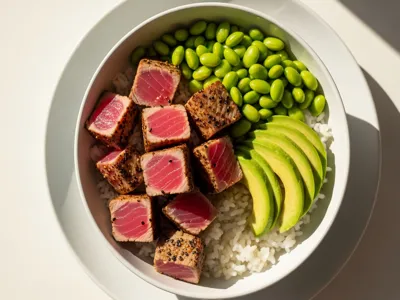
One can of tuna delivers more grams per ounce than almost anything else you can open. Mix with Greek yogurt instead of mayo for creaminess and extra nutrition. Serve over greens or on its own. No cooking required — canned or fresh both work.
- 1 can (5 oz) albacore tuna in water, drained
- 2 tbsp plain Greek yogurt
- 1 tbsp lemon juice
- 2 cups mixed greens
- Cherry tomatoes, cucumber, red onion
4. Greek Chicken Bowl

Cooked chicken, feta, and olives. Warm or cold. The olive oil and feta add enough flavor and fat that you don't need heavy dressing. This one feels like an actual plate of food, not a diet punishment. Preps great — stays fresh 3 days.
- 5 oz grilled chicken breast
- 1.5 cups mixed greens
- 1/4 cup chickpeas
- 2 tbsp crumbled feta
- Olives, red onion, cucumber, and 1 tbsp olive oil + lemon dressing
5. Egg Salad on Whole Grain Toast
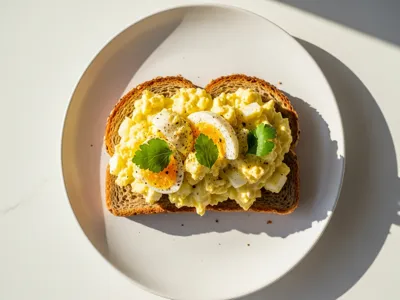
Old school, underrated. Hard-boiled eggs are nutrient-dense and shelf-stable. Mix with a little mayo, mustard, and diced pickle. Serve on toast or lettuce wraps. Toast gives you satiety from whole grains without overloading your stomach.
- 3 large hard-boiled eggs, chopped
- 1.5 tbsp light mayo
- 1 tsp Dijon mustard
- Diced pickle and chives
- 1 slice whole grain toast
6. Rotisserie Chicken + Steamed Veggies
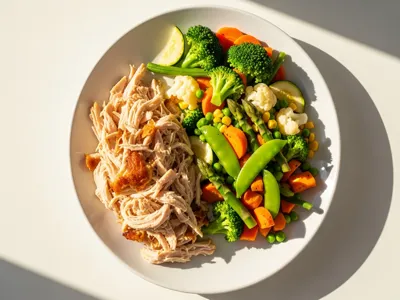
The simplest possible midday option. Rotisserie chicken is pre-cooked, requires zero effort, and delivers serious macros. Pair with steamed broccoli, green beans, or zucchini. No sauce needed — a little salt and lemon is enough. This is your go-to on busy days.
- 5 oz rotisserie chicken breast
- 1.5 cups steamed broccoli or green beans
- Salt, pepper, and lemon juice
- Optional: 1/2 tbsp olive oil if needed for flavor
7. Lentil Soup with Chicken
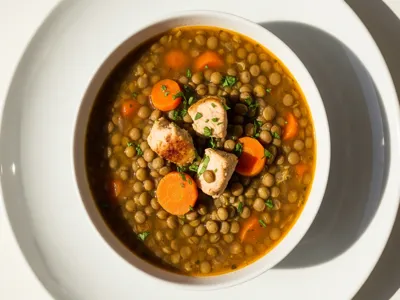
Warm, comforting, and packed with plant-based goodness from lentils plus chicken. Soup is easy on your stomach — the liquid component helps with digestion. The fiber in lentils also supports healthy glucose levels. Make a big batch on Sunday and portion it out. Reheats perfectly.
- 1.5 cups homemade or canned low-sodium lentil soup
- 3 oz diced rotisserie chicken stirred in
- Optional: small side salad or 5 whole grain crackers
8. Shrimp Stir-Fry (Light Sauce)
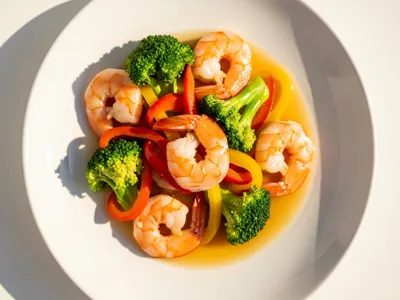
Shrimp cooks in minutes and is lean. The key is keeping the sauce light — heavy soy-based sauces can trigger nausea. Use a splash of low-sodium soy sauce, ginger, and garlic. Lots of veggies, less sauce. Reheats well for weekly prep.
- 5 oz large shrimp, peeled
- 2 cups mixed vegetables (broccoli, bell pepper, snap peas)
- 2 tbsp low-sodium soy sauce
- 1 tsp minced ginger and garlic
- 1 tbsp olive oil for cooking
9. Black Bean and Chicken Quesadilla (Small Portion)
This works because it's a small portion (1 quesadilla, not 2). Black beans add plant-based amino acids and fiber — both key for healthy digestion on GLP-1 medications. Keep cheese moderate and skip extra sauces. Better on days 5-7 when your stomach can handle warmer, more substantial dishes. Pairs well with salsa but not sour cream.
- 1 small whole wheat tortilla
- 3 oz shredded rotisserie chicken
- 1/4 cup black beans
- 2 tbsp shredded low-fat cheese
- 1 tbsp salsa
10. Chef Salad with Sliced Deli Meat
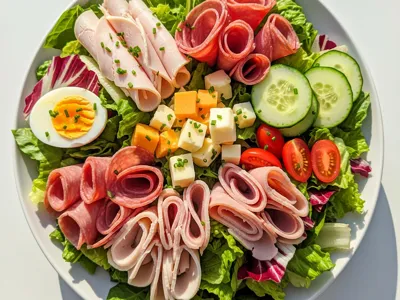
A full plate that looks like a salad. Sliced deli meat, eggs, cheese, and fresh veggies on greens. Use a light vinaigrette (olive oil and vinegar) instead of creamy dressing. You can prep this the night before — keep dressing separate to avoid sogginess.
- 4 oz sliced low-sodium deli meat
- 1 hard-boiled egg, chopped
- 2 tbsp shredded cheddar cheese
- 2 cups mixed greens
- Tomato, cucumber, red onion, and 1.5 tbsp olive oil + vinegar dressing
How to Pick the Right Midday Food for Your Week
Your noon routine is more flexible than breakfast because nausea is usually lower by that time. But your injection cycle still matters. Here's how to plan:
Days 1-2 after injection (nausea can still spike, especially on empty stomach): Stick to cold, pre-cooked options — chicken salad wraps, turkey deli plates, tuna bowls, egg salad. Avoid anything requiring heating or heavy sauces. These choices are light and won't sit in your stomach.
Days 3-5 (nausea fading, appetite starting to return): You've got full range now. Add the warm dishes — rotisserie chicken with veggies, lentil soup, the quesadilla. Your stomach can handle texture and temperature variation. This is a good window to eat a heartier plate if you're up for it.
Days 6-7 (best digestion window, closest to next injection): Go with what sounds good. This is the window where you can experiment or indulge slightly without paying for it. Great days for prepping cold salads and bowls for the tough days ahead.
Building a Balanced Plate: Fiber, Healthy Fats, and More
Getting enough grams gets the spotlight, but it's not the whole story. A truly healthy midday plate also includes fiber, good fats, and a range of vitamins from whole foods. When you're on GLP-1 medications and consuming less overall, every bite needs to pull its weight in terms of nutrition.
Fiber is your secret weapon. Many folks on GLP-1 drugs don't get enough fiber, and that leads to constipation — one of the most common side effects. Adding fiber-rich items to your noon plate fixes this. Think black beans in your bowl, a side of roasted broccoli, or a small portion of lentils. Fiber also slows digestion, which helps keep glucose stable and makes you feel full longer on fewer calories.
Don't fear healthy fats. A drizzle of olive oil, half an avocado, or a small handful of nuts adds energy in a good way. Fat helps your body absorb vitamins A, D, E, and K from the vegetables on your plate. It also makes everything taste better, which matters when your appetite is already low. Anyone who cuts all fat from their diet often ends up with dry, boring plates they won't stick with.
Add fruits when you can. A small apple, a handful of berries alongside your yogurt, or some sliced strawberries on your salad gives you natural sugar, fiber, and antioxidants. Fresh fruit is easy to digest and can make a plain plate feel more like a real, complete spread. Just keep portions reasonable — one piece or a half cup of berries is plenty.
Watch your calories, but don't obsess. Most GLP-1 users need somewhere between 300-450 calories at their midday sitting. Going too low (under 200) means you probably aren't getting enough nutrition. Going too high (over 500) might leave you feeling overly full. The sweet spot is a plate with the right macros, fiber, healthy fat, and some color from vegetables.
Sample Balanced Plate Breakdown
If you're not sure what a balanced midday plate actually looks like, here's a simple formula. Fill half your plate with vegetables — steamed, raw, or roasted. Fill a quarter with lean protein like chicken, tuna, shrimp, or eggs. Fill the last quarter with a complex carb or legume — brown rice, lentils, sweet potato, or whole grain bread. Add a small drizzle of olive oil or a few slices of avocado for your healthy fat. That's it. No fancy recipes, no weird ingredients. Just a straightforward plate that covers all your bases.
This formula works whether you're at home, at the office, or grabbing something from a deli. It also scales — on days when your appetite is low, make the plate smaller but keep the same ratios. On days when you can eat more comfortably, add a bit extra. The key is balance, not perfection. A plate that has the right macros, fiber, fat, and color from vegetables will always beat a random handful of crackers or a bar by itself.
If you want to keep things even simpler, consider a "two container" system for your midday prep. One container holds your base — greens, grains, or both. The second holds your topping: cooked chicken, tuna, hard-boiled eggs, plus any dressing or sauce. When noon rolls around, dump the topping onto the base and you're done. No reheating, no assembly line, no thinking. This takes about two minutes and gives you a complete, balanced plate every single day of the week.
How Your Afternoon Plate Supports Weight Loss on GLP-1 Medications
Weight loss on GLP-1 drugs works best when you consume consistently through the day — not when you starve yourself. A lot of folks think that skipping their midday plate will speed up results. In reality, it does the opposite. Your body needs steady fuel to keep burning fat instead of breaking down muscle.
Here's how a well-built afternoon plate actually helps weight loss:
- It prevents the binge-at-suppertime cycle. When you skip noon, you show up to your evening plate starving and overdo it. That dumps too many calories into one sitting, spikes blood sugar, and often leads to poor choices. A solid midday plate breaks this pattern.
- It keeps glucose steady. GLP-1 medications already help with blood sugar control — that's why they were first developed for diabetes. But the medication works best when paired with steady fuel. A midday plate with the right macros and fiber prevents the afternoon dip that causes cravings.
- It preserves muscle during weight loss. Losing weight without losing muscle is the whole goal. Spreading your intake across three sittings (breakfast, noon, and evening) sends a constant "keep the muscle" signal to your body. Those who pack all their intake into one sitting don't get the same benefit.
If you're on Wegovy specifically, the higher dose means your appetite suppression is stronger. That makes it even more important to plan your noon plate in advance. Don't wait until you feel hungry — by the time hunger shows up, you've already gone too long without nourishment. Set a reminder, have something prepped, and stay consistent each day. Your weight loss results will be better for it.
Track what you consume for a week and you'll notice a pattern. The days you have a balanced midday plate with solid macros, fiber, and the right calories are the days you feel best, make better choices in the evening, and stay on track with your overall diet.
One more thing worth knowing: weight loss on GLP-1 medications tends to come in waves, not a straight line. Some weeks the scale moves, some weeks it doesn't. What stays consistent is how you feel. When you eat well at noon — real food, not just a snack — your energy is better, your mood is steadier, and you sleep better at night. Those factors all contribute to long-term weight loss even when the scale is being stubborn. Trust the process, keep your midday plate consistent, and let the results build over time.
Common Mistakes With Afternoon Eating on GLP-1 Drugs
Here's what we see people get wrong at noon:
Treating your midday plate like a "light snack" because you're on GLP-1 treatment. Just because your appetite is smaller doesn't mean your muscles need less. You still want 25-35g. A salad with a sprinkle of chicken and no dressing is only 10-12g. That's a snack, not a proper sitting. Count your grams.
Starting too early on an empty stomach. If you didn't have much at breakfast and jump into your noon plate at 11am, your stomach might revolt. Wait until 12:30pm at the earliest. Your breakfast needs time to digest. A late breakfast or an early snack helps bridge the gap.
Choosing salad without adding substance. A garden salad is fiber, not a full plate. You need to add chicken, tuna, eggs, or legumes. If you're relying on dressing for satiety, you're not doing it right. Lean chicken, tuna, or eggs are what keep you satisfied.
Repeating the same thing five days in a row. Fatigue hits harder at noon than breakfast. Rotate between 3-4 options. Different bases (lettuce vs. greens vs. soup), different flavors. Your brain needs variety — boredom makes you skip your midday plate or reach for junk.
Frequently Asked Questions
How much protein should I aim for at my midday sitting on Ozempic?
Target 25-35g. Your noon plate is your second major opportunity of the day — it's when you can build momentum on muscle preservation and stabilize blood sugar through the afternoon. By day 5-7 of your injection cycle, your appetite and digestion are more predictable, so this is often the most flexible time.
What's the best type of protein for a midday plate on Ozempic?
Lean options that don't sit heavy: chicken breast, fish, tuna, and shrimp are ideal. Avoid fried choices and heavy sauces — they can trigger nausea and extend digestion time. Cold or room-temperature picks (like rotisserie chicken or sliced deli meat) are often easier on your stomach than hot cooked dishes in the first 48 hours after injection.
Should my noon plate look different on days 1-2 versus days 5-7 of my injection cycle?
Yes. Days 1-2 after injection: stick to lighter options like salads and cold bowls. Days 3-5: you can handle warm dishes and more filling plates. Days 6-7: go with what sounds good — this is when digestion is most cooperative. Plan your prep and restaurant choices around this cycle.
Can I do weekly prep for my midday plates on Ozempic?
Absolutely. Cold options that keep well — like salads with chicken, grain bowls, and deli meat plates — are perfect for prep. Keep dressing, sauce, or mayo on the side to avoid sogginess. Hot dishes like soup and stir-fries can be prepped and reheated. Most stay fresh in the fridge for 3-4 days.
What if I'm not hungry at noon on Ozempic?
Have something anyway. Your appetite is suppressed by design — that doesn't mean your muscles don't need fuel. Even half a serving with 15-20g is better than skipping entirely. Sometimes starting with a small amount triggers your appetite to return naturally. Cold, grab-and-go options work best when hunger is lowest.
How many calories should my midday plate have on GLP-1 medications?
Most GLP-1 users do well with 300-450 calories at noon. Going under 200 means you're likely missing out on key nutrition — amino acids, fiber, and healthy fats. Going over 500 might leave you feeling overly full, especially in the first few days after your injection. Focus on nutrient-dense choices rather than counting every calorie.
Does a midday plate help with weight loss on Ozempic or Wegovy?
Yes. Skipping noon often backfires — you arrive at your last sitting starving and overdo it. A balanced plate with good macros and fiber keeps glucose stable, prevents cravings, and helps your body burn fat instead of muscle. Those who stay consistent through the day tend to see better weight loss results on GLP-1 medications.